What matters in the process
Cake thickness, distribution and permeability determine how liquid moves through the starch bed. Fine particles and concentration changes can alter the cycle. Washing may be important for removing soluble impurities, but product loss and wastewater volume must be measured. The centrifuge should be considered together with upstream slurry preparation and downstream drying or conveying.
A practical example
When comparing two trial recipes, record recovered dry starch per hour and dryer inlet water load. A shorter centrifuge cycle is not automatically better if it delivers a much wetter product that overloads the dryer. Conversely, extending the spin stage to gain a small moisture improvement may unnecessarily restrict plant throughput.
What to check or specify
- Identify the starch source and particle-size distribution.
- Provide feed concentration and temperature ranges.
- Define impurity and final moisture requirements.
- Include product loss and downstream dryer constraints.
Turn the result into a decision
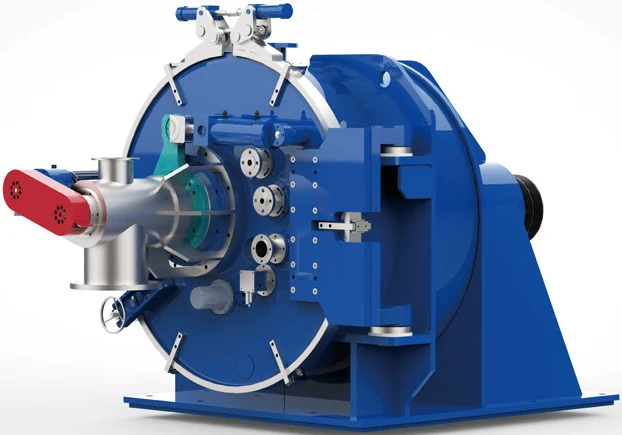
Request a GKH trial using representative slurry and the intended wash liquid. Review the complete cycle, material balance and filter-cloth regeneration over repeated batches. Agree the moisture measurement basis and allowable variations before converting the trial result into a performance commitment.
Equipment context: supplied HUADA English catalogue, PDF pages 31–33. Numerical examples are illustrative calculations. Application guidance must be confirmed for the actual material and selected equipment.