What matters in the process
A uniform cake and a distributed wash supply help avoid preferential paths. Cracks, uneven thickness and local compaction can allow wash liquid to pass without adequately contacting the full cake. Increasing wash volume can improve impurity removal, but may increase product dissolution, effluent volume and the duration of the cycle. Collect mother liquor and wash filtrate separately when the process needs different recovery routes.
A practical example
For a crystalline product, compare several wash volumes at the same cake loading and feed condition. Analyse impurity in the cake and dissolved product in the wash filtrate. A lower cake impurity value accompanied by excessive dissolution may fail the economic target even though the washing result appears better.
What to check or specify
- State impurity limits and analytical methods.
- Measure wash liquid, recovered solids and dissolved losses.
- Keep cake loading and sample procedure consistent.
- Evaluate distribution and repeatability over several batches.
Turn the result into a decision
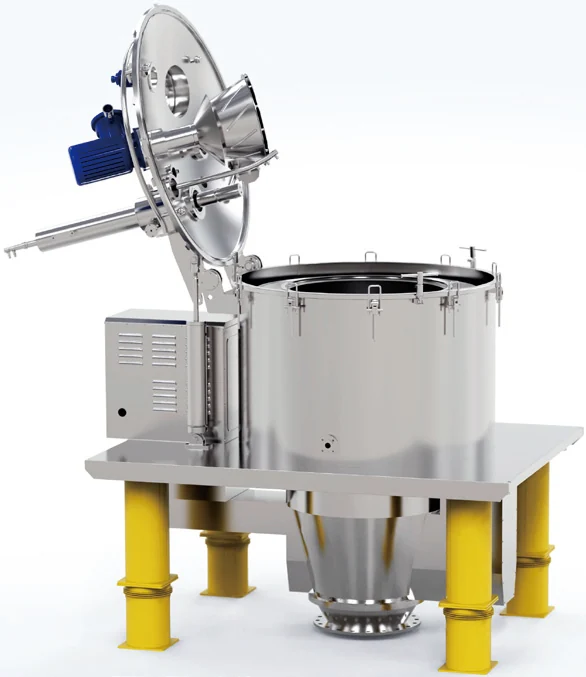
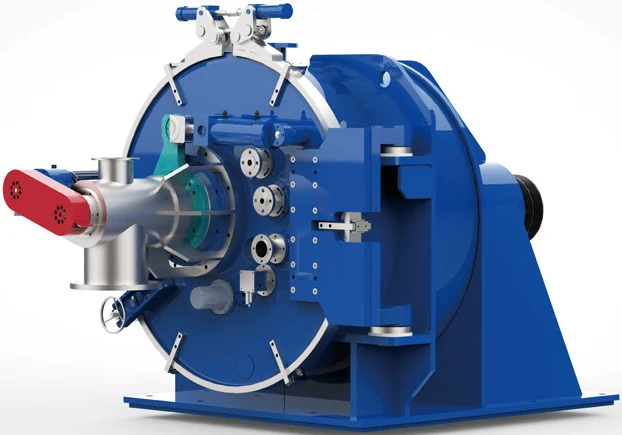
Ask for washing performance to be included in the trial protocol for GKH, GK, PLD or other applicable designs. Specify whether acceptance is based on residual impurity, wash ratio, recovery, cycle time or a combination. A universal wash-water consumption figure is not a substitute for these results.
Equipment context: supplied HUADA English catalogue, PDF pages 23–35. Numerical examples are illustrative calculations. Application guidance must be confirmed for the actual material and selected equipment.