What matters in the process
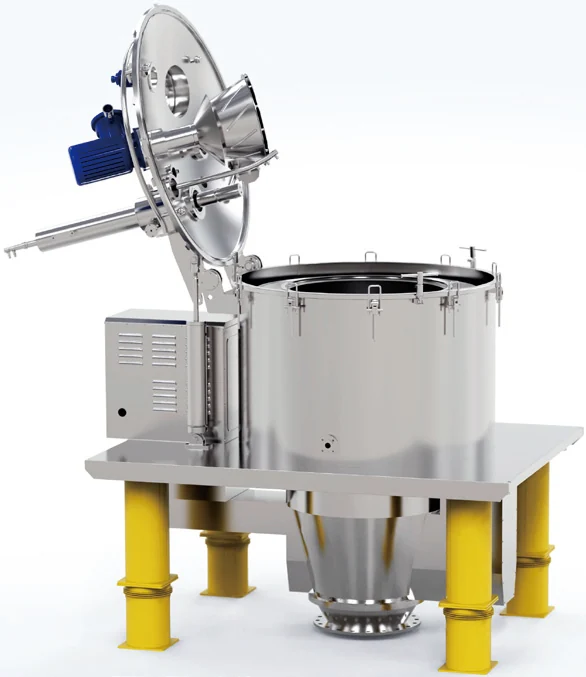
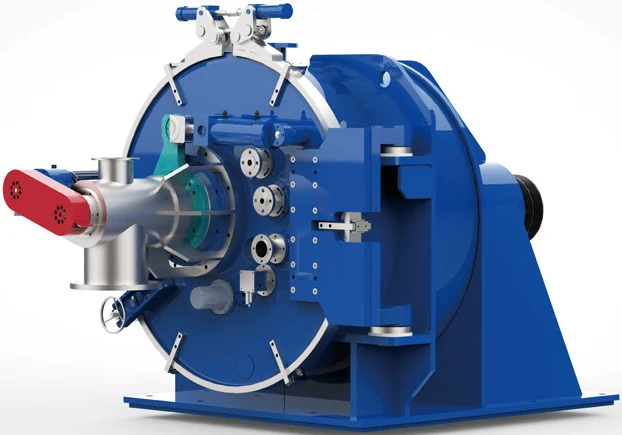
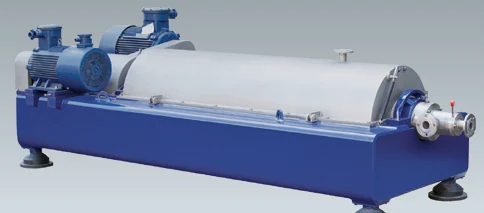
A filter cloth or screen can retain particles that build a suitable cake, but the cake itself often controls liquid flow. Fine or compressible solids may resist drainage even when the cloth opening is appropriate. A decanter does not need a cloth: particles must migrate toward the bowl wall fast enough for separation, then be conveyed without exceeding mechanical limits. Dissolved material does not become a separable solid merely because the feed is centrifuged.
A practical example
A crystallization slurry may need cake washing to displace mother liquor, making basket filtration worth evaluating. A wastewater sludge may need continuous capture of fine solids, directing attention to sedimentation and conditioning. A suspension can also justify a combined design, but the additional stage must solve a measured problem rather than add complexity without evidence.
What to check or specify
- Test whether the solids form a drainable cake.
- Measure particle distribution and phase densities.
- Specify filtrate or centrate quality separately from cake quality.
- Assess whether the process needs cake washing or only clarification.
Turn the result into a decision
Compare technologies with a common material balance. Include solids lost to the liquid, dissolved impurities remaining in the cake and downstream treatment requirements. If one machine cannot meet all objectives economically, a staged process may be more appropriate than a larger single centrifuge.
Equipment context: supplied HUADA English catalogue, PDF pages 9–12, 23–47. Numerical examples are illustrative calculations. Application guidance must be confirmed for the actual material and selected equipment.