What matters in the process
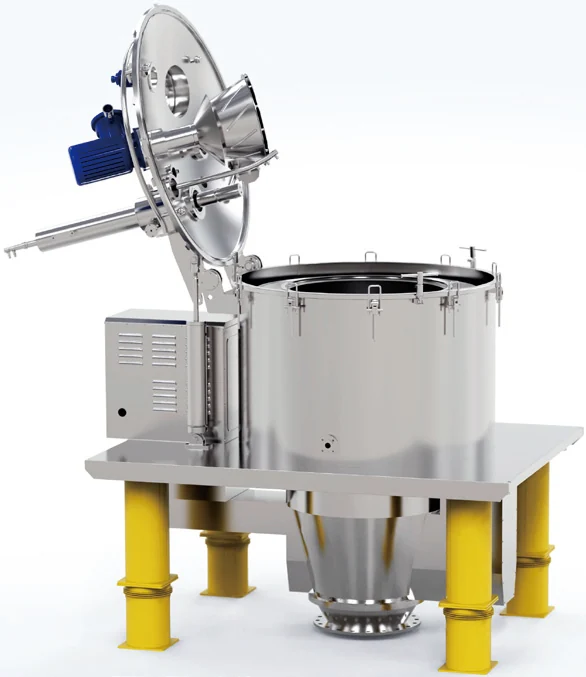
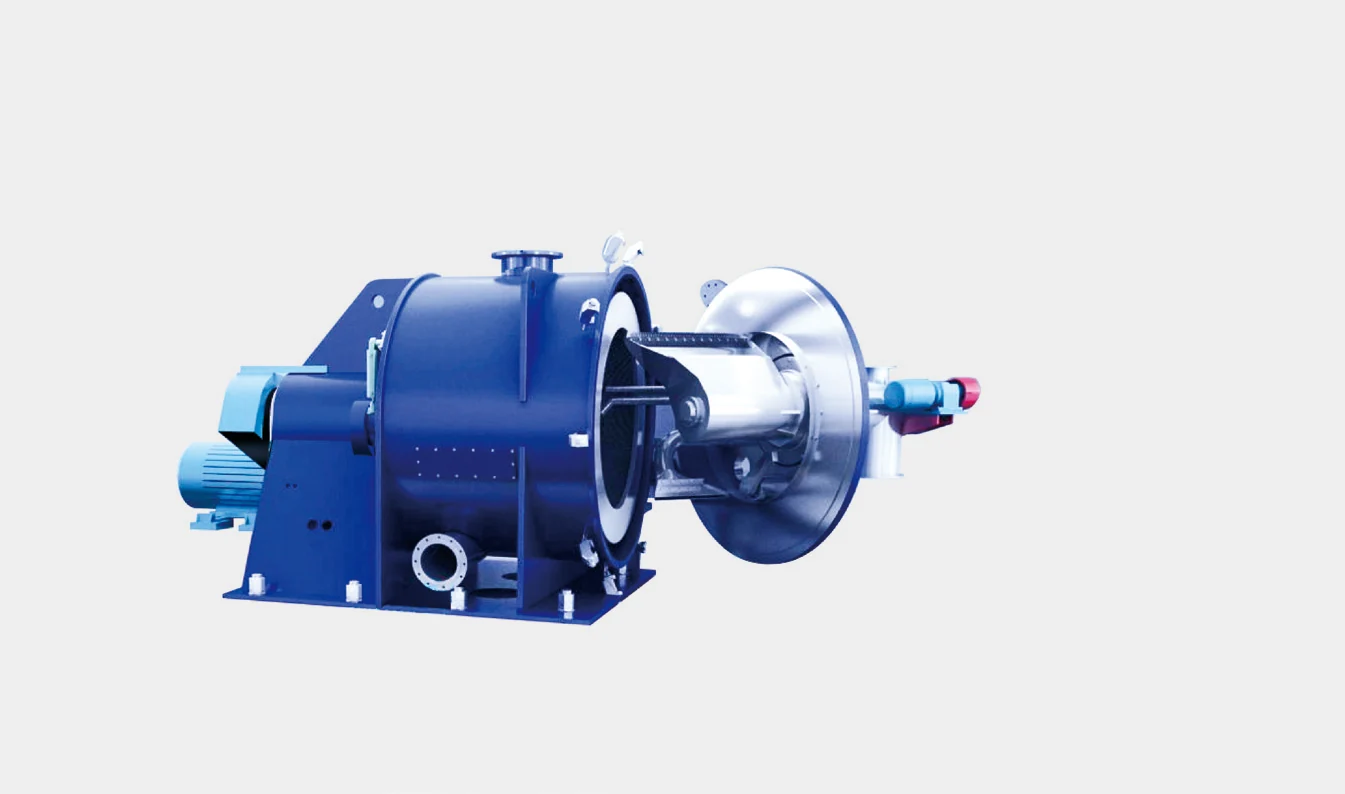
Consider continuous versus intermittent discharge, peak loading, drop height and the receiving geometry. A batch centrifuge may discharge a large mass over a short interval even when average hourly output is modest. For sludge, cake consistency can change with polymer, solids content and storage. Cleanout, drainage and maintenance access should be part of the arrangement.
A practical example
A batch unit recovering 300 kg every 20 minutes has an average output of 900 kg/h. If discharge occurs over two minutes, the immediate transfer rate is much higher than that average. Size and test the receiving interface for the discharge event, not only the hourly balance.
What to check or specify
- Provide average and peak wet-cake discharge rates.
- Describe moisture, stickiness and bulk-handling behaviour.
- Check discharge height, receiving space and cleanout access.
- Coordinate conveyor faults with centrifuge feed control.
Turn the result into a decision
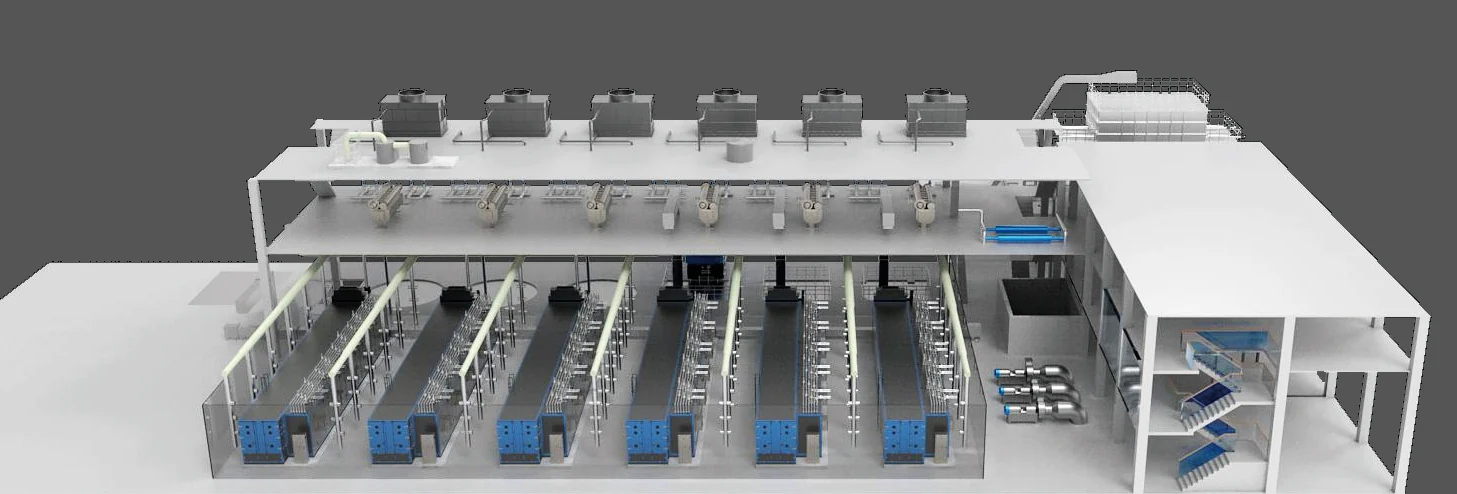
Include representative cake handling in the trial or commissioning plan where practical. For complete HUADA systems, define who supplies hoppers, conveyors and transfer points. A clear interface schedule reduces the risk that an otherwise satisfactory centrifuge is limited by downstream handling.
Equipment context: supplied HUADA English catalogue, PDF pages 23–35, 56–59. Numerical examples are illustrative calculations. Application guidance must be confirmed for the actual material and selected equipment.